Wiring a CW Paddle

Many HF transceivers use a stereo jack for the internal electronic keyer. Some have a 1/4" jack, others have a 3.5mm jack. This is a note on how most of these are wired to a CW paddle. On a TRS cable (tip ring sleeve 3.5mm)

  • Red: tip (left, dit)
  • White: ring (right, dah)
  • Yellow: sleeve (common ground) (this wire could also be black)

If you’re right-handed, use the left paddle for the dit, which would go to the tip of the plug which would be the red connection. The white connection is the dah (right paddle) which goes to “ring” on the plug, adjacent to the tip. The common ground would go on the base “sleeve” connection on the plug, the yellow wire.
CERT Basic Final Exercise 2/10

I had the chance to be a “survivor” of a mock disaster for the Sacramento Metro Fire Station 21 CERT Basic class disaster simulation today. This normally means having a severe injury and role-playing an often uncooperative survivor.

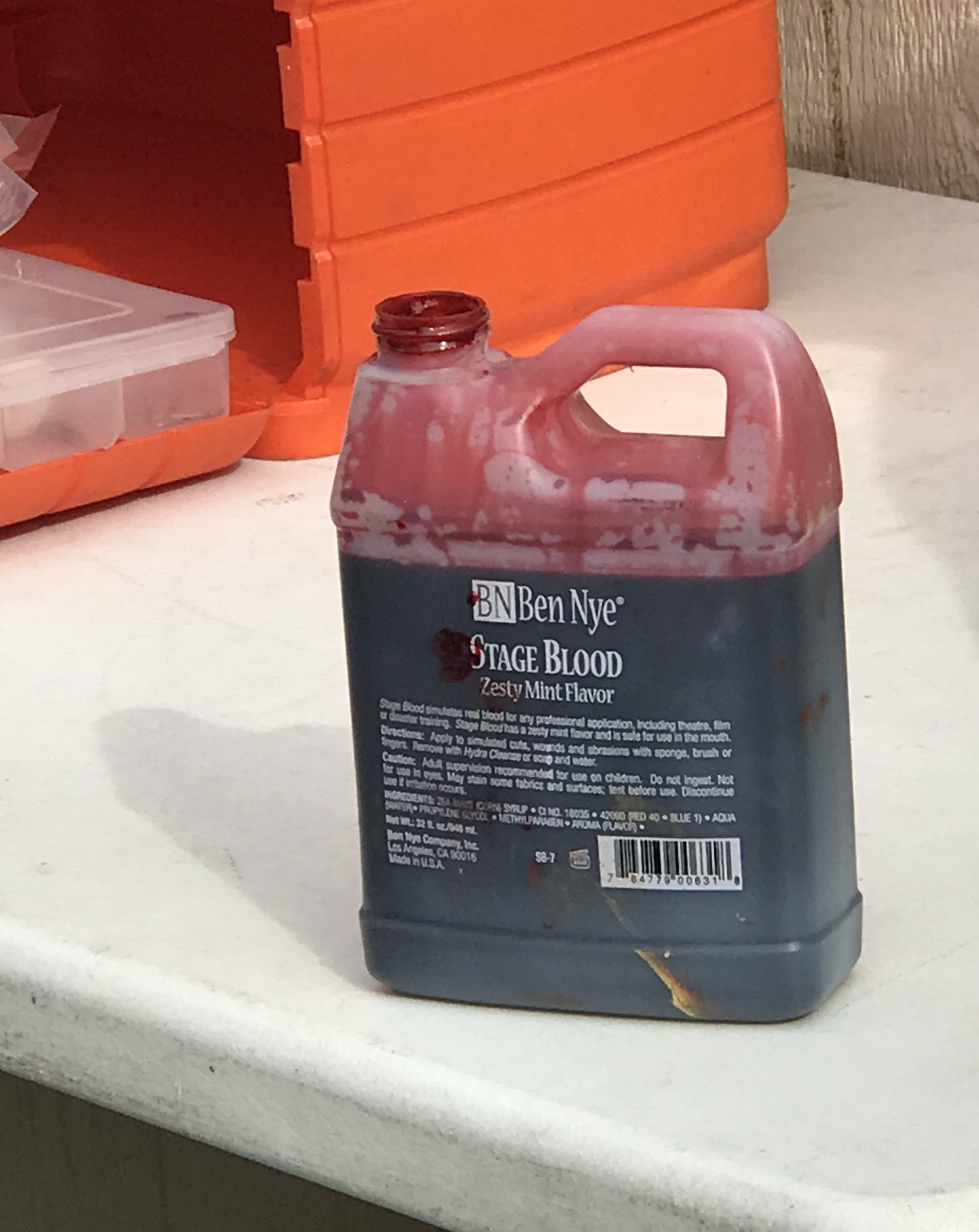
Stage blood for the CERT exercise, mint flavor.

I was to be a victim who had a big hit to the head, and was disoriented and wandering. This meant I did not get to be covered in blood, but only sported a large bruise on my forehead. Maybe I should have chosen to have more contusions on my face or something, would have been far messier. Our disaster event was we were survivors along the debris path of a plane crash. Other volunteers got to have a full makeup session of blood and gashes, one person even had a piece of glass sticking out of her head. CERT volunteers like to make it very realistic.


SDARC Meeting 2/8: History of Phonetics

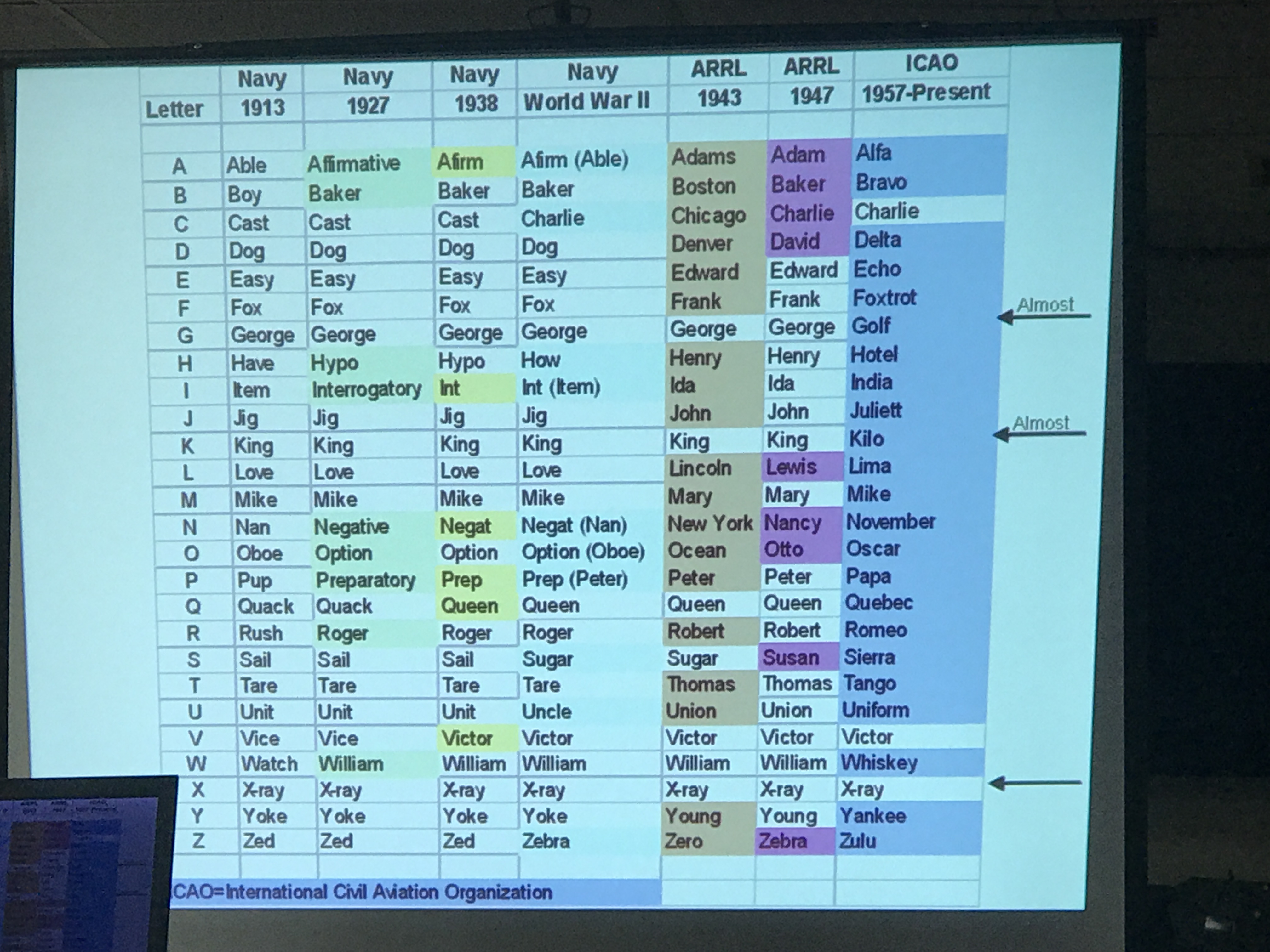
We had our monthly meeting for the Stockton Delta Amateur Radio Club on February 8, 2018 at 7:30pm. After usual club announcement and business, we were treated to a presentation by Jim WB6BET of the Lodi Amateur Radio Club (LARC): The History of Phonetics.

Phonetics in America from 1913 to present

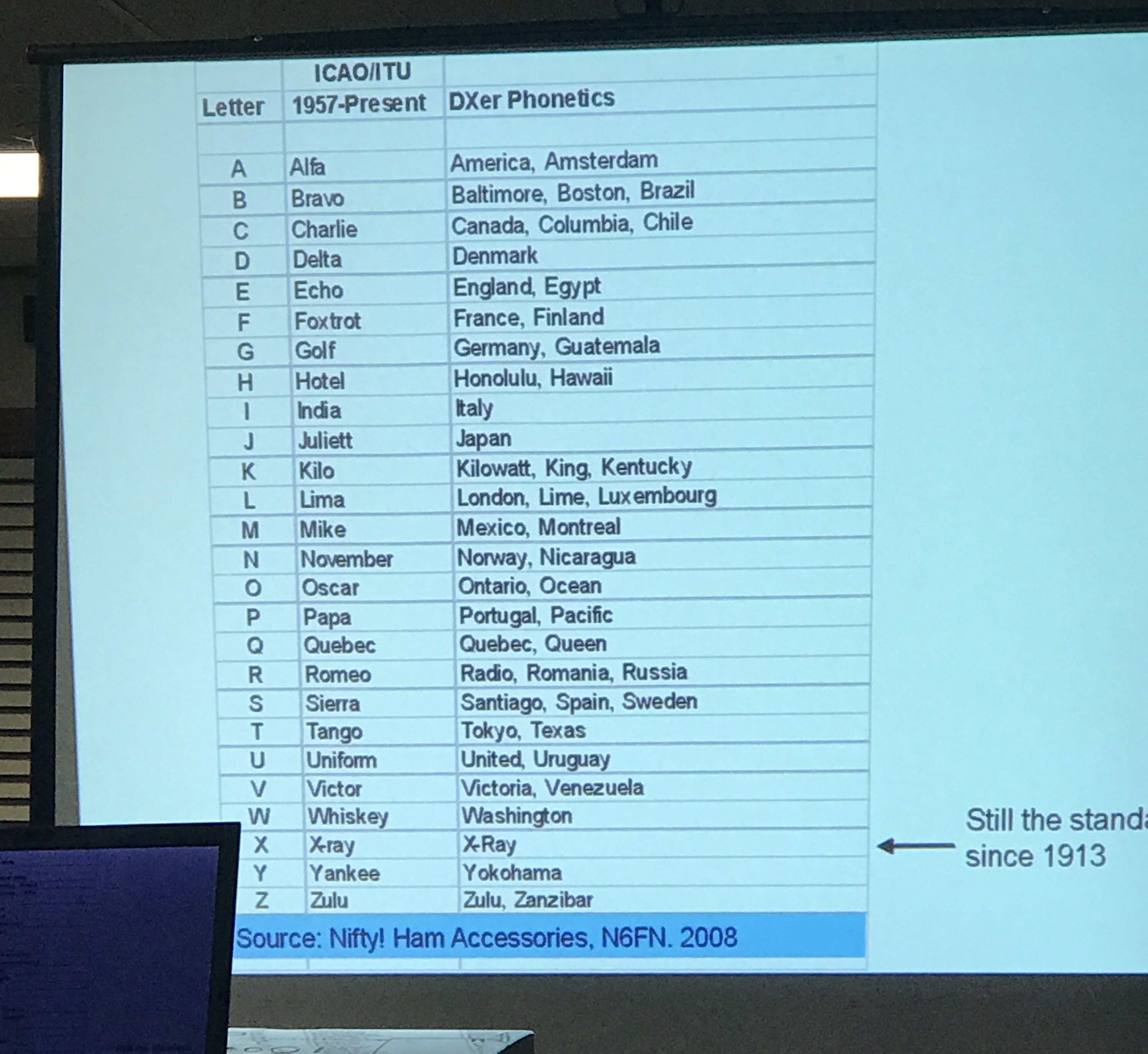
Jim went on to describe DX phonetics.

Alternative phonetics for DX, easier to read at times.

Emilia KI6YYT, president of LARC, also gave a presentation on the USS Hornet, describing its radio systems and an all-women’s QSO event they held there last year. It was interesting to see the kinds of radios they used on ships back then (one slide had a bank of Harris RF-350s). It’s cool that the club meetings are not only a chance to place faces with callsigns, but that each one has some educational aspect in mind. SDARC really has a goal of helping the ham community learn more and make an impact.